Solutions for Compliance Teams
BAT is built to reduce the administrative burden of IFA compliance while strengthening oversight, consistency, and regulatory confidence.
Guided by compliance professionals at IFAC and used in live advisory environments, BAT brings core compliance activity into a single, structured platform. It replaces manual, fragmented processes with clear workflows that support scalable and defensible oversight.
One platform for the full compliance function
BAT brings core compliance tools into a single operational hub, for brokers and IFAs including:
- File Checking
- Financial Promotions
- Audits
- Enquires and Complaints
- Breach Registers
- T & C management
- CPD & Financial Exams
Removing the need of multiple systems, spreadsheets, and inboxes, and gives compliance teams a joined up view of advice activity across the business.

- Greater consistency across advisers
- Less administration, more time for client advice.
- Faster compliance approvals with less back-and-forth.
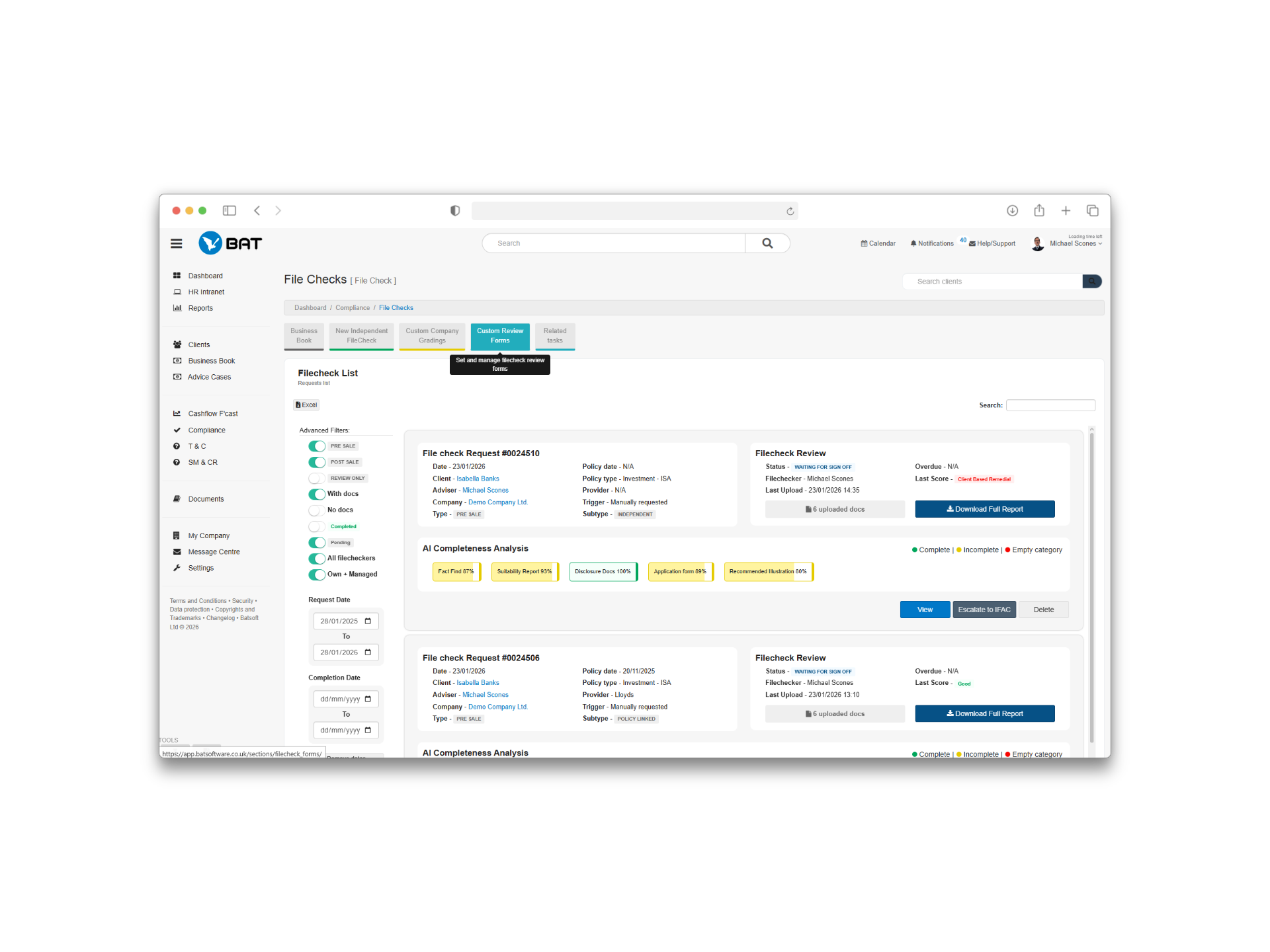
AI supported file checking at scale
use BAT to move to 100 percent file checking across the advice process.
Our AI powered file checking tool supports compliance teams by prechecking advice cases for completeness, cohesion, and material inconsistencies. This significantly reduces time spent on basic checks, while applying the same standards across every file.
AI is not a replacement for compliance judgement. It acts as a productivity and risk reduction layer, empowering teams to focus where oversight matters most.
Replace manual checking with structured oversight
Traditional compliance relies heavily on manual document reading, side by side comparisons, and repeated completeness checks. This approach is time consuming, inconsistent, and difficult to scale.
IFA firms employ skilled staff to externally check some 10 per cent of adviser files. It takes 20 minutes just to sort out the multiple documents – sometimes as many as 50, only to find a key piece of information is missing (eg soft fact discussion on risk or vulnerability) so the file cannot be checked anyway – incomplete.
Batsoftware strips out the info instantly on document upload- saving 20 minutes. The AI then analyses the documents and pass judgement -matching human the judgement – and saving a check that takes a further 100 minutes on average per file.
Clear visibility across advice activity
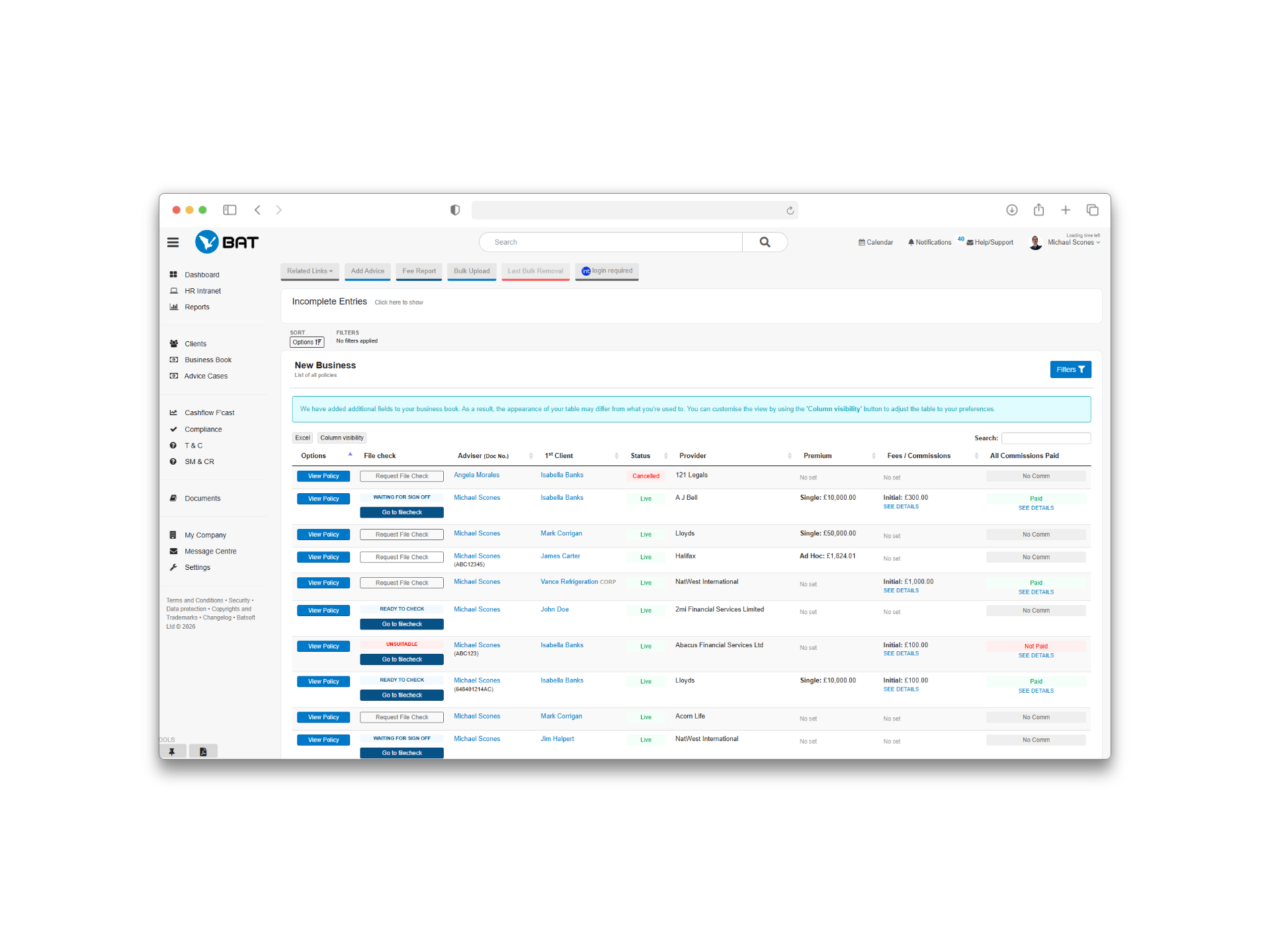
BAT provides real time visibility across all advice cases.
Compliance teams can easily see what has been submitted, what is under review, what has been approved, and what remains outstanding. This reduces reliance on email updates, improves accountability, and allows managers to allocate workload proactively rather than reactively.